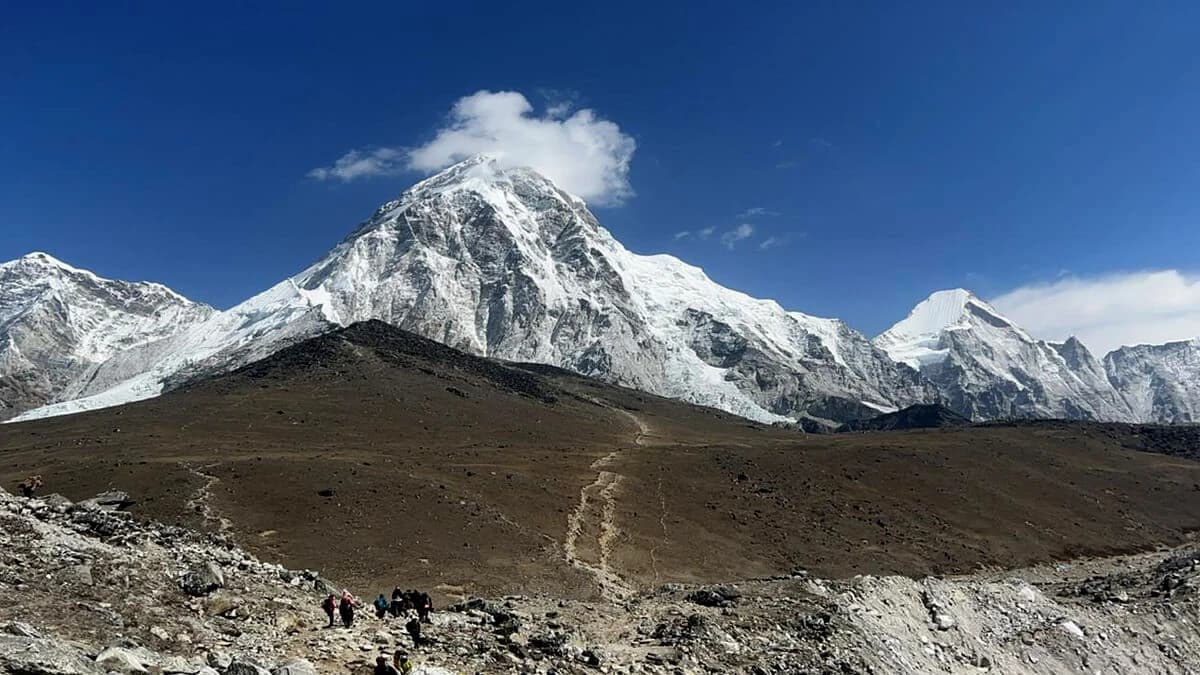
Everest Three Pass Trek - 17 Days

Everest region (Khumbu), Nepal
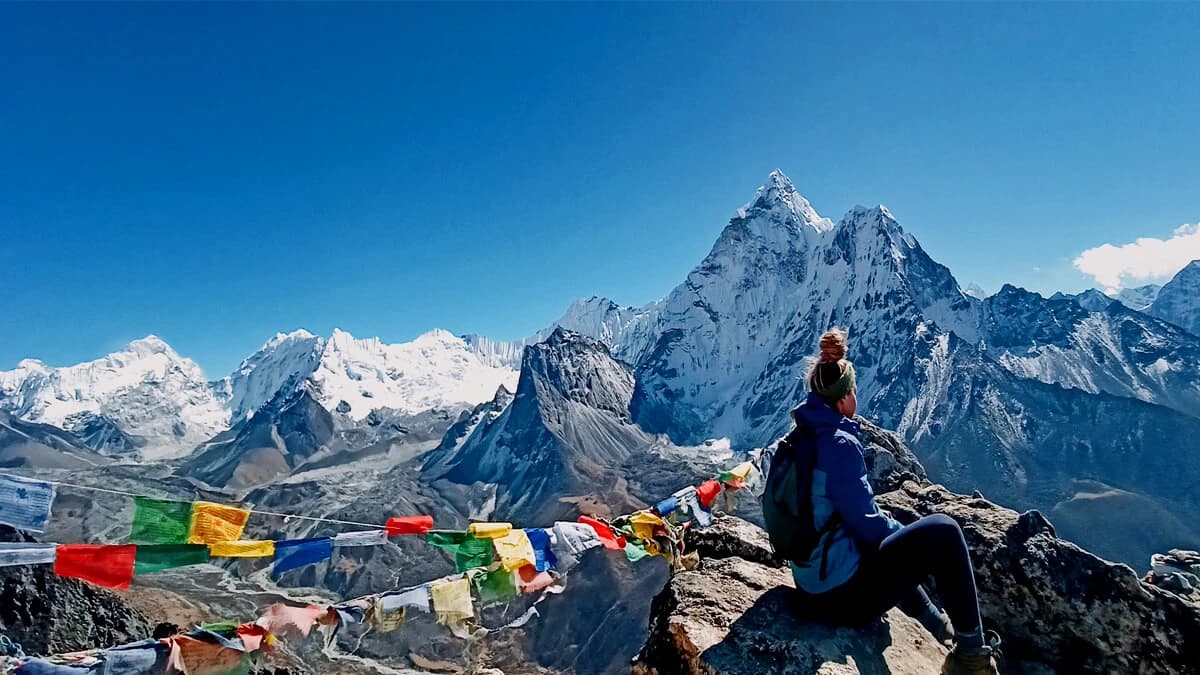
Everest Three Pass View From Renjo-La Pass
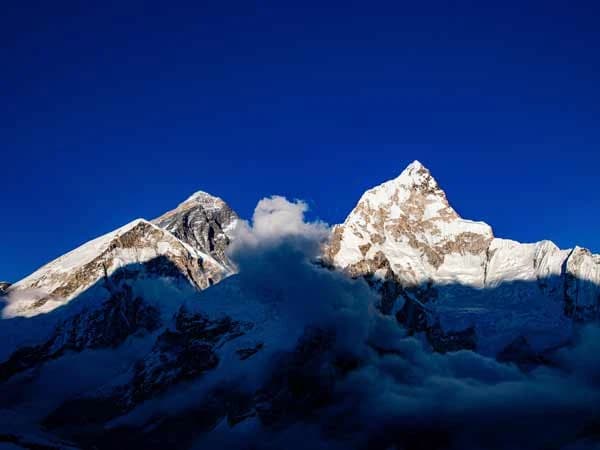
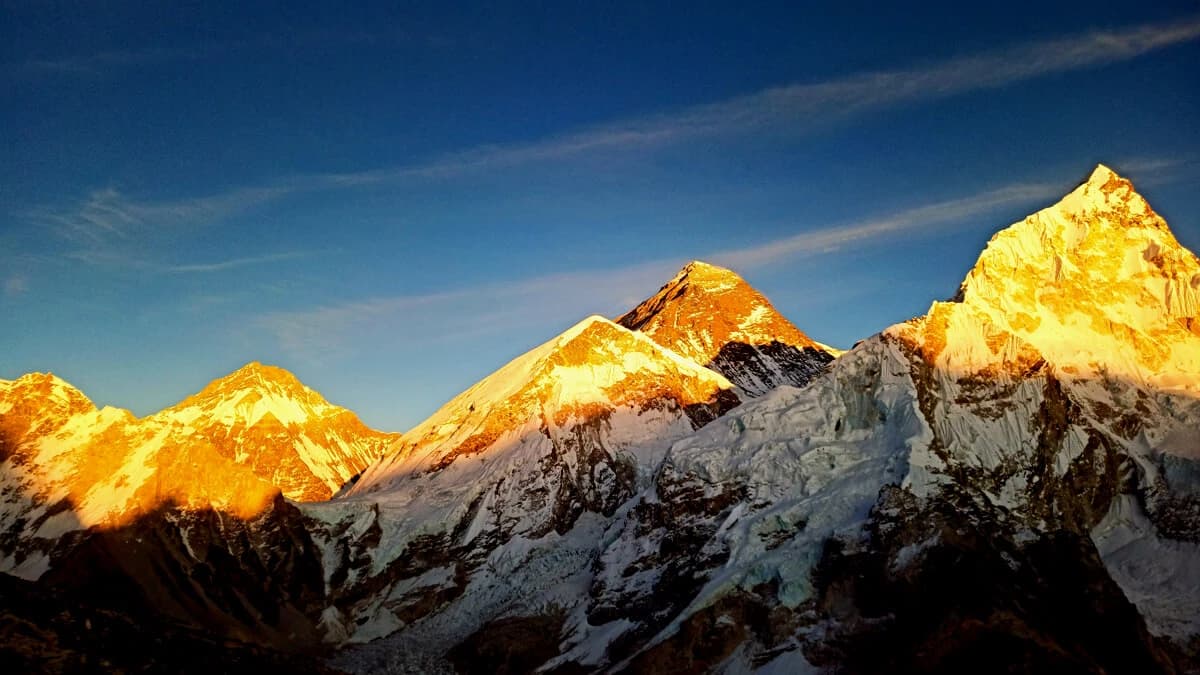
Sunrise View From Kala Patthar
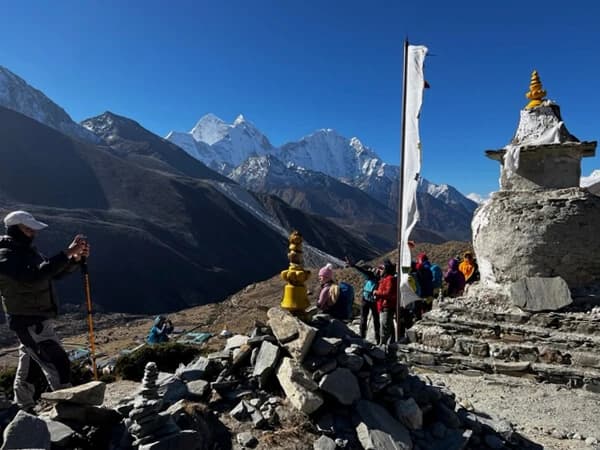
Kala Patthar Climbing
Duration17 Days
CountryNepal
Trip GradeStrenuous
i
Maximum Altitude5,535 m
Group Size1 - 10 Travelers
StartsKathmandu
EndsKathmandu
ActivitiesEverest Three High Passes
Best TimeSpring and Autumn Season

Cross Renjo La, Cho La and Kongma La on a clockwise circuit linking Gokyo, Everest Base Camp and Kala Patthar in one 17- days trek.
The Everest Three Passes Trek is for trekkers who want more than a walk to Everest Base Camp and back. From Namche Bazaar, the route turns toward Thame and Lungden before crossing Renjo La (5,360 m / 17,585 ft) into Gokyo. From there, Cho La (5,420 m / 17,782 ft) leads toward the Everest Base Camp side of the Khumbu. After Everest Base Camp and Kala Patthar (5,545 m / 18,192 ft), one major crossing still remains: Kongma La (5,535 m / 18,159 ft), the highest of the three passes. The result is a genuine circuit through several distinct parts of the Khumbu rather than a trek built around one destination and a return along much of the same valley. It is also demanding. This 17-day version is best suited to fit, well-prepared trekkers who are comfortable with consecutive mountain days, long pass crossings and sustained altitude.
17 Days | Strenuous | 3 High Passes | Gokyo + EBC + Kala Patthar | Highest Point 5,545 m

                                                                                                                                                          [Ask a Trek Expert]

Why Choose the Everest Three Passes Trek?

The classic Everest Base Camp trek is primarily destination-led. The Three Passes Trek is route-led. After Namche, you leave the main Base Camp trail for Thame and Lungden. Renjo La moves you into Gokyo. Cho La brings you back toward Lobuche and the upper Everest Base Camp corridor. Everest Base Camp and Kala Patthar follow, but the journey still is not finished. Kongma La then carries the route into the Imja Valley before the long descent begins.
Each pass changes where the trek goes.
You experience the Thame side of the Khumbu, the Gokyo lake basin, the Everest Base Camp corridor and the Chhukung side within one continuous journey. This is not simply a harder version of Everest Base Camp. It is a broader way of crossing the Everest region.

Clockwise Route at a Glance

Lukla →Phakding →Namche Bazaar Thame →Lungden →Renjo La →Gokyo Lake →Thagnak →Cho La →Dzongla →Lobuche →Gorak Shep → Everest Base Camp →Kala Patthar → Lobuche → Kongma La → Chhukung →Dingboche →Tengboche → Namche Bazaar → Lukla

Renjo La - 5,360 m / 17,585 ft

The first high crossing takes the route from the Lungden side into Gokyo.

Cho La - 5,420 m / 17,782 ft

The second pass connects the Gokyo side with Dzongla and Lobuche.

Kongma La - 5,535 m / 18,159 ft

The third and highest pass carries the route from the Lobuche side into the Imja Valley. Chhukung is the gateway to Island Peak expedition. Together, the three passes create the circuit.

Everest Three Passes Trek Highlights

  • Cross Renjo La, Cho La and Kongma La in one clockwise journey.
  • Reach Everest Base Camp without making it the only objective of the trek.
  • Climb Kala Patthar (5,545 m / 18,192 ft), the highest point on the itinerary.
  • Spend two nights in Gokyo and climb Gokyo Ri (5,357 m / 17,575 ft).
  • Approach the first pass through Thame and Lungden instead of immediately following the main EBC corridor.
  • Travel through the Gokyo lake and Ngozumpa Glacier landscape before crossing toward Lobuche.
  • Experience quieter high-pass sections alongside the established Everest Base Camp route.
  • Finish the high-pass sequence over Kongma La before descending through Chhukung, Dingboche and Tengboche.
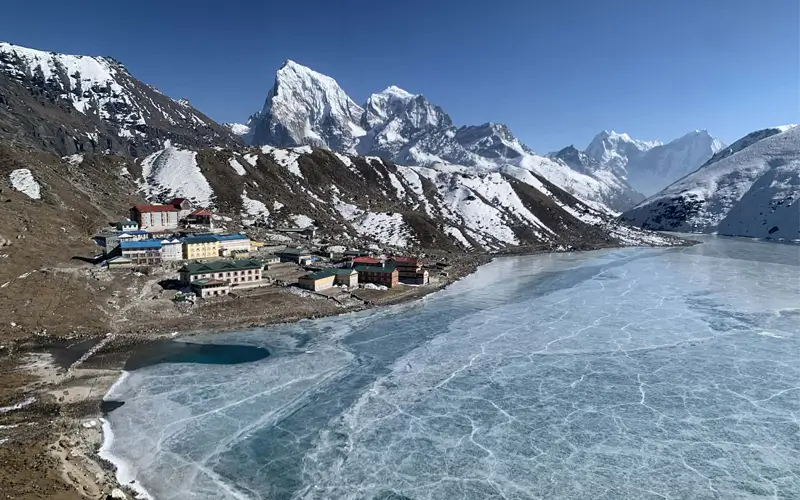
Gokyo Lake Trek Nepal
Gokyo Trek — Frozen Lake, Himalayan Views & a Peaceful Mountain Stay

Is This Trek Right for You?

A good fit if you:

  • already have some multi-day trekking experience;
  • are comfortable walking for several consecutive days;
  • want Gokyo, Everest Base Camp, Kala Patthar and all three passes in one route;
  • prefer a circuit to retracing the standard EBC trail;
  • accept simpler accommodation at higher settlements;
  • understand that snow, altitude and mountain weather can change the day's plan.

Consider the Everest Base Camp Trek instead if you:

  • are planning your first serious Himalayan trek;
  • mainly want Everest Base Camp and Kala Patthar;
  • have less time;
  • prefer to avoid three demanding passes above 5,000 metres.

This is a relatively compact Three Passes itinerary. If you prefer a slower pace or additional acclimatization time, the route can be extended rather than forcing the same circuit into fewer days.
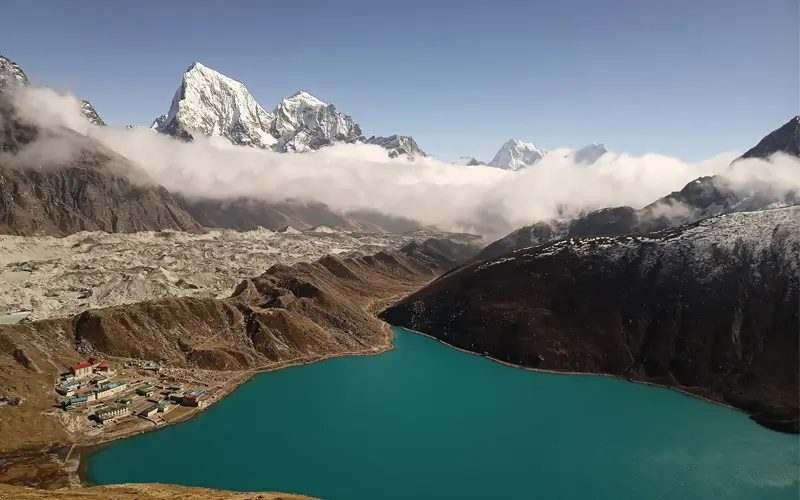
Gokyo Lake View
Gokyo Lake — where the mountains, clouds and silence come together

Difficulty and Fitness

The Everest Three Passes Trek is strenuous.The challenge comes from accumulation rather than technical climbing. Over 17 days, you cross three passes above 5,000 metres, spend repeated nights at altitude, walk over moraine and glacial terrain and complete several long mountain days. The toughest stages can require around six to nine hours of walking depending on trail conditions, snow and group pace.

What preparation helps for Everest Three Passes Trek?

You should arrive able to walk uphill and downhill for several hours on consecutive days.

  • regular hill walking;
  • cardiovascular training;
  • leg and core strength;
  • long walks carrying the daypack you intend to use;
  •  back-to-back training days rather than only single hard workouts.

Previous multi-day trekking experience is strongly recommended. The goal is not simply to be fit enough for one difficult day. You need to recover well enough to do it again.

What about altitude?

The itinerary includes an acclimatization day in Namche and a second night in Gokyo. Those stops help pace the journey, but no itinerary can guarantee how an individual will respond to altitude. Symptoms must be taken seriously. If the guide believes a trekker should stop ascending, rest or descend, the planned schedule comes second. This 17-day route is therefore better suited to experienced and well-prepared trekkers than to someone choosing the shortest possible Three Passes itinerary.

 Everest Three Passes Trek Dates, Price and Availability

Our Three Passes Trek packages are designed to take care of the details from start to finish. From permits, Lukla flight arrangements and mountain accommodation to meals, experienced guide support and local logistics, we handle the essential arrangements throughout your journey. We also manage necessary operational changes that may arise due to weather or transport disruptions, helping you trek with greater peace of mind.

Since 1998, we have been helping travelers experience the Himalayas with reliable local expertise and dedicated support. We take care of the details so you can focus on the trail, the mountains and the experience. More questions Send Inquiry

Why Trek with Global Eco Trails?

On a Three Passes trek, the operator matters most when the plan needs to change. The straightforward days are easy to describe on a website. The more revealing moments are when weather affects a pass, a trekker needs more time, a Lukla flight changes or the group has to decide whether continuing upward is sensible. Global Eco Trails is a Kathmandu-based trekking company and TAAN member. For this trek, the company coordinates the moving parts of the journey: permits, flights, lodge arrangements, licensed guide support and local trekking logistics.
The aim is not to pretend uncertainty can be removed from the Himalaya. It cannot. The value is having a local team responsible for helping manage that uncertainty when it appears.

Speak to Our Trek Expert 24/7 Support Available

If you are uncertain about fitness, porter support, adding an acclimatization day, private departure arrangements or whether the Three Passes Trek is right for you, ask before booking. 

Plan Your Everest Three Passes Trek

If you want a demanding clockwise circuit that combines Gokyo, Everest Base Camp, Kala Patthar and all three high passes- and the 17-day pace fits your experience - the next step is to check the current departure and group price. If you are unsure about fitness, acclimatization, porter support or whether a slower itinerary would suit you better, ask before booking.
Itinerary

Our meticulously curated itinerary is outlined. If you would like to have a customized itinerary for your family, friends, and groups, Please feel free to let us know and we will happily produce a new itinerary to suit your requirements.

Trip PlanExpand All
01Day

The trek begins with the mountain flight to Lukla. From the airstrip, descend into the Dudh Koshi valley and follow the trail through small settlements, stone paths and suspension bridges to Phakding.

The first day is intentionally short. The longer climb to Namche comes tomorrow.

Meals: Lunch and DinnerAccommodation: Mountain Lodge / TeahouseDuration: Approx. 4 hrs.Distance: Approx. 7 km
02Day

Follow the Dudh Koshi valley toward Sagarmatha National Park before beginning the sustained climb to Namche Bazaar.

The lower section follows the river and suspension bridges. The final ascent into Namche Bazaar provides the first substantial test of the trek.

Max Altitude: 3,440 mMeals: Breakfast, Lunch, And DinnerAccommodation: Guest HouseDuration: 5 - 6 hoursDistance: 11 km
03Day

Remain in Namche Bazaar for a second night.

Take an acclimatization walk above the town before returning to sleep at the same altitude. Depending on the chosen route and conditions, options may include walking toward Syangboche or nearby Sherpa settlements such as Khumjung or Khunde.

The purpose is to spend time higher without moving the sleeping altitude upward again. The afternoon is for rest, food, hydration and equipment checks before turning toward Thame.

Max Altitude: Route - dependentMeals: Breakfast, Lunch, And DinnerAccommodation: Guest HouseDuration: 3 - 4 hoursDistance: 3-5 km
04Day

Leave the standard Everest Base Camp direction and turn northwest toward Thame.

The trail enters the Bhote Koshi side of the Khumbu, and the flow of trekkers changes as you move away from the main EBC corridor. Thame marks the beginning of the approach toward Renjo La.

Max Altitude: Approx. 3,900 m / 12,795 ftMeals: Breakfast, Lunch, And DinnerAccommodation: Guest HouseDuration: 5 hoursDistance: 9 km
05Day

Continue gradually higher toward Lungden. This is a positioning day rather than one that needs another major side excursion added to it.

The priority is to reach Lungden with enough time to eat, hydrate and recover before Renjo La.

Max Altitude: 4,368 m / 14,331 ftMeals: Breakfast, Lunch, And DinnerAccommodation: Guest HouseDuration: 5 hoursDistance: 10 km
06Day

Start early for the first major crossing.

The climb toward Renjo La becomes increasingly exposed as altitude rises and the pace naturally slows. The significance of the pass becomes clear once you cross it: instead of descending into the same valley, the route opens toward Gokyo.

Descend carefully toward the Gokyo lake basin and your lodge for the night. One pass complete. Two remain!

Max Altitude: 5,360 mMeals: Breakfast, Lunch, And DinnerAccommodation: Guest HouseDuration: 6 - 8 hoursDistance: 12 km
07Day

Stay in Gokyo for a second night.

The morning climb to Gokyo Ri gives a higher perspective over the lake basin, Ngozumpa Glacier and surrounding mountains. Return to Gokyo rather than immediately pushing toward Cho La. The second night also provides useful recovery after Renjo La.

Max Altitude: 5,370 m mMeals: Breakfast, Lunch, And DinnerAccommodation: Guest HouseDuration: 3 hoursDistance: 4 km
08Day

Leave Gokyo and cross the uneven moraine and glacial landscape toward Thagnak. The distance is short, but progress can be slower than an ordinary valley trail suggests. 

This is deliberately a lighter day before Cho La. Reach Thagnak, eat well, rest and prepare for an early start.

Max Altitude: 4,700 mMeals: Breakfast, Lunch, And DinnerAccommodation: Guest HouseDuration: 3 hoursDistance: 5 km
09Day

The second high-pass day begins early.

Climb toward Cho La (5,420 m) through increasingly rough high-altitude terrain. Snow and ice can alter both the speed and character of the crossing, so current conditions matter more than the timetable printed on a website.

After reaching the pass, descend toward Dzongla. The day demands concentration as well as fitness: steep ground and changing surface conditions can make the descent tiring even after the major climb is complete.

Max Altitude: 5,420 mMeals: Breakfast, Lunch, And DinnerAccommodation: Guest HouseDuration: 6 - 8 hoursDistance: 10 km
10Day

After Cho La, today's route is deliberately shorter.

Continue toward Lobuche and reconnect with the main Everest Base Camp corridor. Two passes are behind you. The next section shifts focus to Everest Base Camp and Kala Patthar.

Max Altitude: Approx. 4,930 m / 16,175 ftMeals: Breakfast, Lunch, and DinnerAccommodation: Guest HouseDuration: 3 hoursDistance: 6 km
11Day

Follow the upper Khumbu trail toward Gorak Shep.

After reaching the lodge and taking a break, continue across moraine toward Everest Base Camp. The terrain makes the distance feel longer than it appears on a map, and the altitude keeps the pace measured. Return to Gorak Shep for the night.

On a conventional EBC trek this is close to the climax. Here, it is a major milestone - but not the final challenge. Kala Patthar comes tomorrow. Kongma La still remains!

Max Altitude: 5,364 m / 17,598 ftMeals: Breakfast, Lunch, And DinnerAccommodation: Guest HouseDuration: 7 hoursDistance: 14 km
12Day

Start early for Kala Patthar.

At 5,545 metres, it is the highest point reached on this itinerary - even slightly higher than Kongma La. After the climb, descend to Gorak Shep and continue back toward Lobuche. The afternoon is for recovery. The third pass is tomorrow.

Max Altitude: 5,545 m / 18,192 ftMeals: Breakfast, Lunch, And DinnerAccommodation: Guest HouseDuration: 6 hoursDistance: 9 km
13Day

The final high crossing is also the highest of the three passes.

Leave Lobuche early and move across rough glacial and moraine terrain toward Kongma La. This is one of the most committing days of the itinerary. The altitude remains high, the terrain is rocky and there are fewer easy ways to shorten the day once the crossing is underway.

From the pass, descend toward the Imja Valley and Chhukung. Reaching the lodge brings a clear change in the journey. Renjo La, Cho La and Kongma La are all behind you.

Max Altitude: 4,750 m / 15,584 ftMeals: Breakfast, Lunch, And DinnerAccommodation: Guest HouseDuration: 8 hoursDistance: 11 km
14Day

For the first time in several days, the overall direction is consistently downward.

Descend through the Imja Valley to Dingboche and continue toward Pangboche and Tengboche. After repeated days of exposed high-altitude terrain, the return of larger settlements and more vegetation is noticeable. The hardest part of the circuit is over, but this remains a substantial walking day.

Max Altitude: 3,867 m / 12,687 ftMeals: Breakfast, Lunch, And DinnerAccommodation: Guest HouseDuration: 5 hoursDistance: 13 km
15Day

Descend toward the Dudh Koshi River before climbing again toward Namche Bazaar.

Returning to Namche closes the high-mountain circuit. You left town heading toward Thame. You return from the Everest Base Camp Valley via Tengboche side. Everything between those two points has formed the Three Passes loop.

Max Altitude: 3,867 m / 12,687 ftMeals: Breakfast, Lunch, and DinnerAccommodation: Guest HouseDuration: 4 - 5 hoursDistance: 11 km
16Day

Follow the lower Khumbu trail through Monjo and Phakding before the final climb to Lukla. The altitude is no longer the main challenge, but this remains a full walking day. By evening, the trekking part of the Three Passes circuit is complete.

Max Altitude: 3,440 m / 11,286 ftMeals: Breakfast, Lunch, and DinnerAccommodation: Guest HouseDuration: 7 hoursDistance: 18 km
17Day

Fly from Lukla according to the operating arrangement for the day.

During peak trekking periods, Lukla flights may operate through Ramechhap/Manthali Airport rather than directly to Kathmandu. If Manthali is used, a road transfer to Kathmandu also becomes part of the travel day.

Mountain aviation remains sensitive to weather, visibility and operational conditions. Avoid scheduling an unnecessarily tight international connection immediately after the trek.

Max Altitude: 1,350 mMeals: Breakfast and Lunch
Did not find what you are looking for?Reach out to our travel experts.
Customize Trip

Cost Details

Includes

  • Complementary Airport Pickup on Arrival in Kathmandu.
  • Sagarmatha National Park entry permit.
  • TIMS-Card
  • Applicable Khumbu local trekking permit / Trek Card.
  • Scheduled Lukla flight arrangements according to the airport being used for the departure.
  • 16-Breakfasts, 16 lunchs and 16 dinners during the trekking program
  • 16 nights twin sharing mountain lodge / teahouse accommodation  
  • Licensed English-speaking trekking guide.
  • Guide's meals, accommodation, salary and required staff insurance.
  • Applicable local ground transfers included in the itinerary.
  • Seasonal fruit during the trek where provided by the program.
  • The company provides sleeping bag or duffel bag for treks if required; they should be returned after the trek. 
  • The company offers a farewell dinner after the trek. 
  • Farewell dinner in a Nepalese typical restaurant
  • Applicable government taxes and company service charges.
  • Company token of love T-shirt

Excludes

  • International flight Tickets to and from Nepal.
  • Nepal entry visa costs, visa can be obtained upon arrival in Kathmandu International Airport. Visa costs 30 USD, 50 USD, and 125 USD for 15-Days, 30-Days, and 90-Days respectively 
  • Personal drinks, snacks and expenses
  • Porter service is available for additional cost. A porter costs 380 USD and can be assigned by two trekkers. 
  • Hot showers, battery charging and internet where charged separately by lodges.
  • Personal trekking clothing and equipment.
  • Personal travel and medical insurance.
  • Emergency helicopter evacuation and medical treatment.
  • Additional accommodation or meals in Kathmandu caused by an early return or itinerary change unless specifically
    covered.
  • Staff Gratuities (tips)

Dates & Availability

Select Departure Date
Oct 2026
Nov 2026
Dec 2026
Jan 2027
Feb 2027
Mar 2027
Apr 2027
May 2027
Jun 2027
Jul 2027
Starts:
October 05, 2026
Ends:
October 21, 2026
Status:
Guaranteed
Price:
US$1499
Availability:
Starts:
October 15, 2026
Ends:
October 31, 2026
Status:
Guaranteed
Price:
US$1499
Availability:
Starts:
October 26, 2026
Ends:
November 11, 2026
Status:
Guaranteed
Price:
US$1499
Availability:
Starts:
October 31, 2026
Ends:
November 16, 2026
Status:
Guaranteed
Price:
US$1499
Availability:

Travel is about making genuine connections with nature and new people. You can join our pre-arranged tour with a set itinerary. If the listed departure date does not suit you, please inquire with us about alternative departure dates. Occasionally, we add extra departures due to high demand for the trek.

Add-ons & Options

  • Hotel in Kathmandu: We do facilate the hote booking option to our clients before and after the Everest Three Pass Trek. The standard hotel, centrally located in tranquil environment, twin sharing room with breakfast cost 45 USD per night.
  • Porter Services: having a porter will support you to accomplish your adventure. A porter can be assign by two client and he will carry 20 - 25 kg of  backpack.The cost of Porter is 380 USD in total including his meals, accommodation, insurance, trek gear, salary and his entry fees.
  • Jungle Safafri: After the High Pass Trek, if you would like to enjoy 2 night / 3 day Wildlife Safari in Chitwan National Park, It cost 230 USD per person in the standard hotel and budget hotel 150 USD in full board package including Jungle activities. See here the details.
  • Helicopter Flight: The mountain weather can be change frequently and leads the flight canceled. To avoid the flight delay or cancellation, there is a Helicopter flight from Kathmandu to Lukla and cost 500/ USD per head. If you would like to have it, please kindly book with us.

Essential Information

Everest Three Passes Trek Best Time to Go

The main seasons for the Everest Three Passes Trek are Spring - March to May and Autumn - October to November.

March to May

Spring becomes gradually milder as the season progresses. March remains colder at altitude. April and May generally bring warmer conditions lower on the route, although snow and ice can still affect the high passes.

October to November

October and November form the main autumn trekking window. Conditions are generally more settled after the monsoon, while nights become progressively colder as November advances.

What about September?

September is transitional, especially earlier in the month. Later September can become suitable as the monsoon retreats, but it should not be treated as though conditions are automatically the same as October.

What about December?

December can still offer workable trekking periods, but temperatures are significantly lower. Snow can make Renjo La, Cho La or Kongma La more demanding or temporarily unsuitable. The season suggests the likely window. Current mountain conditions decide whether a high pass should actually be crossed.

Accommodation while on Three Passes Trek

The trek uses mountain lodges and teahouses. Do not expect the same standard throughout the route. Larger settlements such as Namche offer more accommodation choice and facilities. Higher or more remote stops such as Lungden, Thagnak and Gorak Shep are simpler.
Depending on the lodge and location, bathrooms may be shared and services such as hot showers, charging and internet may cost extra. 
The higher and more remote the route becomes, the more basic the accommodation generally becomes.

Everest Three Passes Trek Meals

Meals are taken in the trekking lodges.
The standard package structure works as 17 breakfasts, 17 lunches and 16 dinners: lunch and dinner begin on Day 1, breakfast begins on Day 2, and Day 17 finishes with breakfast and Lunch. Choice is generally wider in larger settlements and becomes more limited higher on the route. At altitude, eating and drinking consistently are part of managing the trekking day, not simply a restaurant choice.

Permits and Licensed Guide Requirements

Global Eco Trails arranges the applicable trekking documentation included with the package.

  • TIMS Card (Trekkers Information Management System)
  • Sagarmatha National Park entry permit
  • Khumbu Pasang Lhamu local trekking permit / Trek Card

The Three Passes Trek is listed under Nepal's current TIMS provision requiring trekkers on the route to be accompanied by a licensed trekking guide and carry an agency-issued TIMS Card. That means the required guide and permit arrangements are part of planning the trek, not optional paperwork to think about after arrival.

Lukla Flights and Ramechhap

Do not assume every Lukla flight will operate directly from Kathmandu. During busy trekking periods, Ramechhap/Manthali Airport may be used for Lukla services. If Manthali is used, a road transfer between Kathmandu and Ramechhap becomes part of the travel day. The exact departure airport, reporting time and transfer plan should therefore be reconfirmed close to departure rather than promised months in advance. Weather and visibility can also delay or cancel Lukla services. Some uncertainty is inherent in mountain aviation. The  operator's role is to help manage the available alternatives when that happens.

Everest High Passes Porter Support

Porter support is optional.
For the Three Passes route, make the decision realistically. A lighter daypack can make a meaningful difference across three high passes and repeated long days. If you want porter support, ask for the current porter rate when booking. The website should maintain one controlling porter price rather than separate figures in different sections.

Travel Insurance

Travel insurance is required for a trek of this nature. Your policy should be appropriate for trekking to the maximum altitude of the itinerary and should include emergency medical treatment and evacuation where applicable. Carry the relevant policy and emergency contact information during the trek.

FAQs

The Everest Three Passes Trek is considered a strenuous adventure. The route combines three passes above 5,000 metres, repeated high-altitude nights, steep ascent and descent, rocky moraine, glacial terrain and several long walking days.

No. Technical climbing experience is not required for this three passes trek. However, if you have previous trekking experience, it will make the trek easier and more enjoyable. As weather and snow conditions can change, you'll also be accompanied by an experienced guide throughout the journey.

The Everest Three Passes trek is in the Everest region of Nepal. Renjo La - 5,360 m / 17,585 ft; Cho La - 5,420 m / 17,782 ft; Kongma La - 5,535 m / 18,159 ft. Kongma La is the highest of the three.

Kala Patthar at 5,545 m / 18,192 ft is the highest point of Everest three passes trek. It is slightly higher than Kongma La.

Yes. Everest Base Camp is scheduled on Day 11 after Cho La and before Kala Patthar sunrise hike and Kongma La pass

Yes. The itinerary includes a hike to Gokyo Ri on Day 7, offering spectacular panoramic views of Everest and the surrounding peaks. You'll also enjoy views of the Ngozumpa Glacier before spending a second night in Gokyo.

Routine trekking days are generally around four to six hours. The major pass days can take approximately six to nine
hours depending on the stage, pace and conditions. The itinerary shows approximate distance and walking time for
every trekking day.

It depends on snow and ice conditions. Do not assume the same traction equipment will be required on every departure. Global Eco Trails team will advise current situation of the trek at the time of booking.

Yes. The Three Passes Trek is listed under Nepal's current TIMS provision requiring a licensed trekking guide and an agency-issued TIMS Card.

Not automatically. Porter support can be added at the current package rate.

You should tell to the guide immediately. Depending on the symptoms and circumstances, the correct response may involve rest, stopping further ascent, descending or arranging medical assistance. The published itinerary never takes priority over health.

A pass crossing is not guaranteed simply because it appears in the itinerary. Snow, ice, strong wind, poor visibility or the condition of a trekker may require a delay or route adjustment. 

Weather and operational conditions can disrupt Lukla flights. Global Eco Trails helps coordinate the available alternatives, but travelers should keep some flexibility in their Nepal schedule and avoid an unnecessarily tight international connection immediately after the trek.

The principal trekking months are March - Apri l- May and September - October - November - December. Late September and December may sometimes be workable, but conditions are more variable and should be treated separately from the core seasons.

Yes. If you prefer more acclimatization time or a less compressed schedule, additional nights can be incorporated rather than removing important stages elsewhere.

Yes. Private departures and itinerary adjustments can be discussed, but high-altitude changes should preserve sensible route progression rather than simply reducing the number of days.

Travel insurance is recommended. Insurance should be appropriate for high-altitude trekking and emergency evacuation at the elevations reached on this route.

Well, Some very fit first-time Himalayan trekkers may be capable of it, but this is not the route we would normally recommend as an easy introduction to high-altitude trekking. Previous multi-day trekking experience is strongly recommended.

Speak to our Expert
Krishna Dahal
Krishna Dahal
+977 9841485631

You May Also Like

Mt. Everest with Nuptse and Khumbu Ice Fall with Smoke
16 Days
8
6

Everest Base Camp with Island Peak Climbing

Everest Region

$1800USD$2500 USD
Thokla pass in Everest Base Camp trek
15 Days
10
7

Gokyo Lake with Everest Base Camp Trek - 15 Days

Sagarmatha National Park
2 reviews

$1135USD$1699 USD
Need Help? Call Us.+977 9841485631