

The 12-day Annapurna Circuit Trek is a shorter version of Nepal's classic circuit for trekkers who want to experience its main high-altitude section through Manang, Thorong La and Mustang within a limited timeframe. The walking route begins at Dharapani, crosses Thorong La Pass at 5,416 m and finishes at Jomsom before continuing to Pokhara by road.
Rather than walking every road-accessible section of the historical Annapurna circuit, this itinerary concentrates on the route through the Marsyangdi Valley, Upper Pisang, Manang, Thorong High Camp, Thorong La, Muktinath, Kagbeni and Jomsom. The Muktinath and Kagbeni is the gateway to Upper Mustang Trek and Dharapani for Manaslu Circuit.
Why Choose This 12-Day Annapurna Circuit?
This itinerary is designed for travellers who want the Manang-Thorong La-Mustang section of the Annapurna Circuit without committing to a much longer journey.
Road transport is used to reach Dharapani and again after Jomsom. Between those points, you trek through Chame, Pisang, Ghyaru, Ngawal, Manang, Ledar, Thorong High Camp, Muktinath and Kagbeni.
The shorter format saves time, but it also creates a more concentrated trekking schedule. You should be comfortable with consecutive walking days and increasing altitude.
Is 12 Days Enough for the Annapurna Circuit?
Yes, 12 days is enough for this shortened version of the Annapurna Circuit, but it is not the same as walking the longer traditional circuit.
This itinerary concentrates the walking section between Dharapani and Jomsom so that trekkers can experience Manang, Thorong La and lower Mustang within a limited timeframe.
Choose this route if you:
- have limited time in Nepal
- want to cross Thorong La
- want to experience both Manang and Mustang
- are comfortable with a moderate to challenging high-altitude trek
- do not need Tilicho Lake or Nar Phu Valley included
- Consider a longer itinerary if you:
- prefer slower acclimatization
- want additional rest or contingency days
- want fewer road transfers
- want to include Tilicho Lake
- want to explore Nar Phu Valley
A shorter Annapurna Circuit is not automatically better or worse than a longer route. It is a different way of experiencing the region.
Annapurna Circuit Route, Landscape and Culture
One of the defining features of the Annapurna Circuit is how much the landscape changes as you gain altitude.
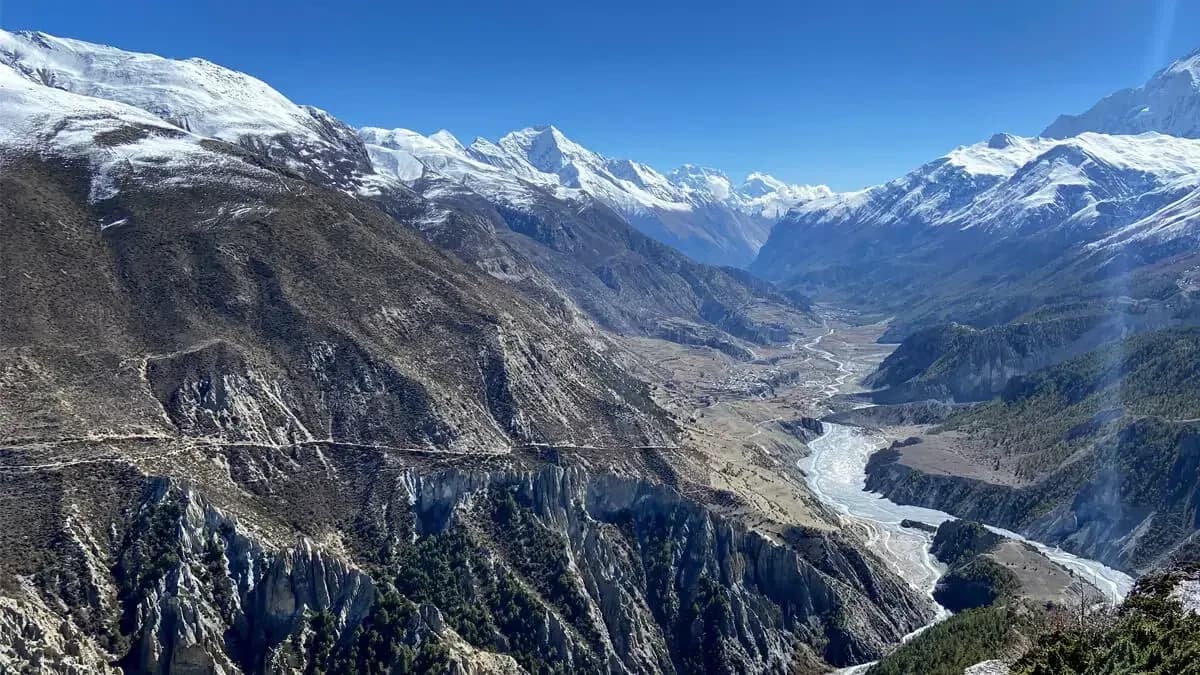
The early trekking days follow the Marsyangdi Valley, with forests, cultivated slopes and mountain settlements along the route.
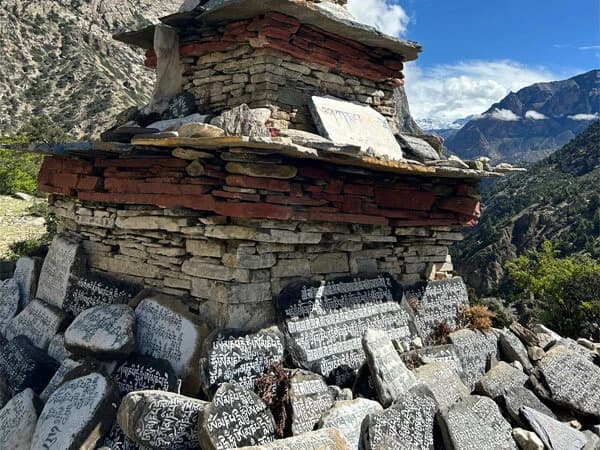
From Pisang, the upper trail climbs through Ghyaru and Ngawal toward Manang. The valley becomes broader and drier and Tibetan Buddhist cultural influences become increasingly visible.
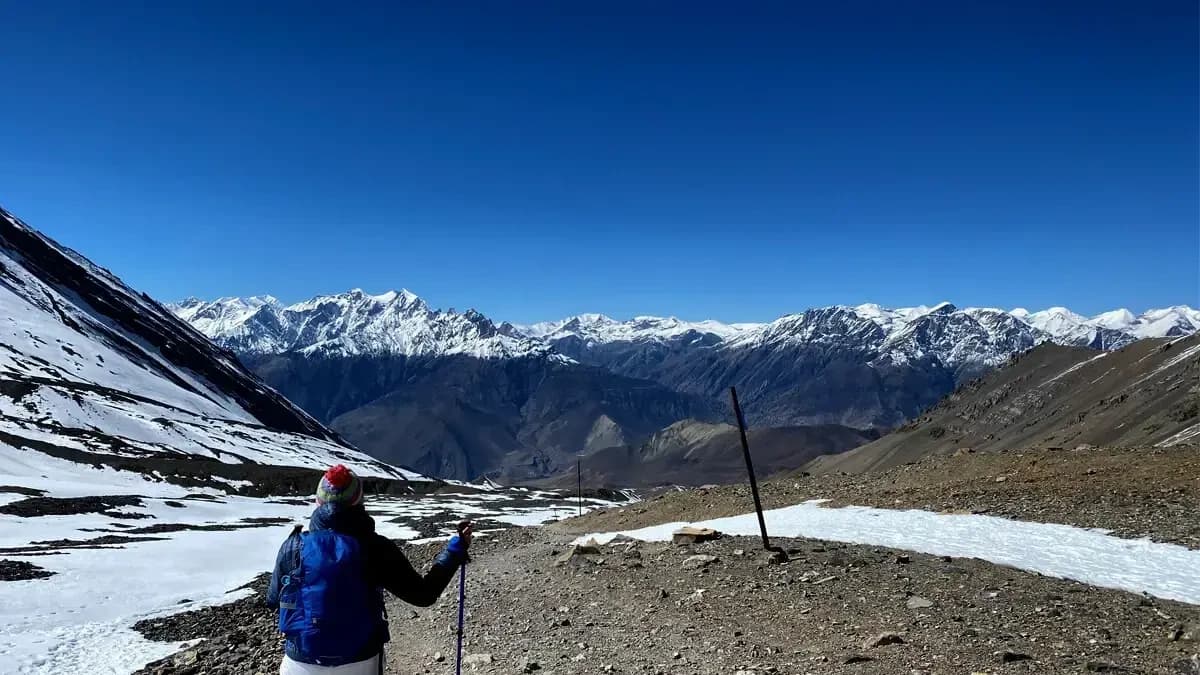
Above Manang, settlements become fewer and vegetation thins as the route climbs through Ledar, Thorong Phedi and High Camp.
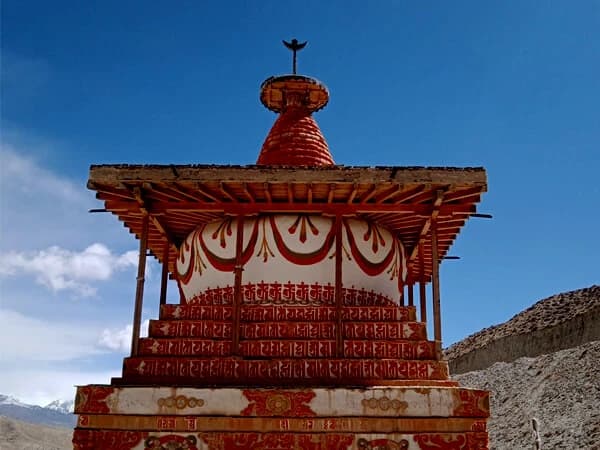
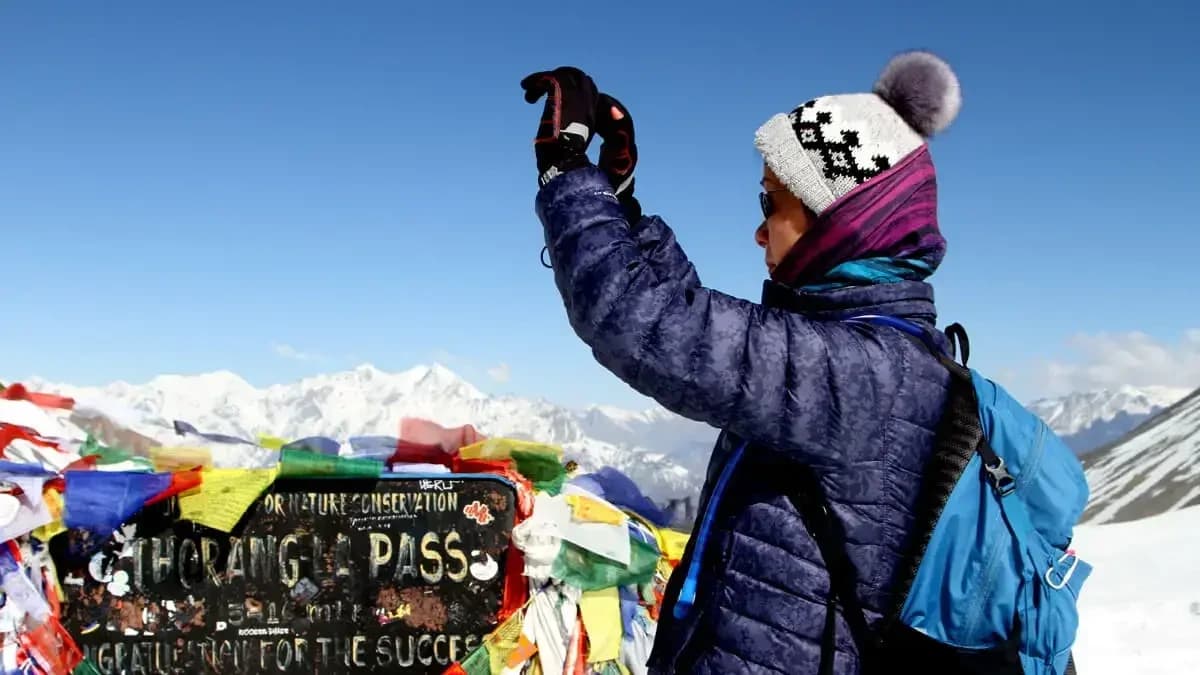
At Thorong La Pass, 5,416 m, the route crosses from the Manang side of the circuit toward Mustang. The trail then descends to Muktinath before continuing through Kagbeni and the Kali Gandaki Valley to Jomsom.
Annapurna Circuit Trek Highlights
- Cross Thorong La Pass at 5,416 m, the highest point of the trek.
- Follow the upper route through Ghyaru and Ngawal to Manang.
- Spend two nights in Manang, including a dedicated acclimatization day.
- Experience the transition from the forested Marsyangdi Valley to high alpine terrain.
- Descend into Muktinath and Mustang after crossing Thorong La.
- Walk through Kagbeni and the Kali Gandaki Valley before finishing at Jomsom.
Annapurna Circuit Route at a Glance
| Day | Route | Approx. Sleeping altitude |
| 1 | Arrival In Kathmandu | 1,350 m |
| 2 | Kathmandu → Besishara→ Dharapani | 1,860 m |
| 3 | Dharapani→ Chame | 2,610 m |
| 4 | Chame→ Pisang | 3,200 m |
| 5 | Pisang→ Ghyaru→ Ngawal→ Manang | 3,540 m |
| 6 | Acclimatization in Manang | 3,540 m |
| 7 | Manang → Ledar | 4,250 m |
| 8 | Ledar→ Thorong Phedi → High Camp | 4,925 m |
| 9 | High Camp→Thorong La → Muktinath | 3,760 m |
| 10 | Muktinath → Kagbeni → Jomsom | 2,743 m |
| 11 | Jomsom → Tatopani → Beni → Pokhara | 810 m |
| 12 | Pokhara → Kathmandu | 1,350 m |
Upper Pisang or Lower Pisang: Which Route Do We Take?
From Pisang to Manang, trekkers can generally follow either the lower route or the higher trail through Ghyaru and Ngawal.
When weather and guest condition are suitable, Global Eco Trails guides generally prefer the Upper Pisang route.
Our guides prefer it because it is usually:
- less crowded
- more scenic
- better for broad views across the Manang Valley
- useful for gaining some additional altitude before sleeping in Manang
The lower trail is generally busier and offers fewer of the open mountain views found on the higher route.
The upper route involves more climbing, so the decision is not automatic. Weather, trail conditions and the health and energy of the guest are considered on the day.
Annapurna Circuit Trek Difficulty: Can I Do It?
The Annapurna Circuit Trek is a moderate to challenging high-altitude trek.
It does not require technical climbing skills, but this itinerary reaches 5,416 m at Thorong La and includes several consecutive days of walking at increasing altitude.
The main challenges are:
- high altitude
- consecutive trekking days
- sleeping above 4,000 m
- sustained ascent and descent
- cold conditions above Manang
- the climb toward High Camp
- the Thorong La crossing
- individual response to altitude
Can Beginners Do the Annapurna Circuit?
A physically fit first-time Himalayan trekker can complete the route, but it should not be treated as an easy beginner trek.
You are more likely to enjoy the itinerary if you regularly walk, hike or exercise and are comfortable being active for several hours at a time.
Previous high-altitude trekking experience is helpful but not essential.
If this is your first major Himalayan trek and you are concerned about pace or altitude, a longer itinerary with additional acclimatization time may be a better choice.
Which Day Is the Hardest?
For most trekkers, Day 9 across Thorong La is the hardest.
The day begins early at High Camp, climbs to 5,416 m and then involves a long descent toward Muktinath.
At this altitude, walking is slower and cold, wind or snow can make the crossing more difficult.
How Should I Prepare?
You do not need mountaineering training, but regular preparation helps.
Walking, hiking, stair climbing, cycling, jogging and other cardiovascular exercise can help build endurance before the trek.
Fitness makes the walking easier, but fitness does not prevent altitude sickness.
Altitude and Acclimatization
The itinerary includes a full acclimatization day in Manang before continuing above 4,000 m.
Common early symptoms of acute mountain sickness can include:
- headache
- nausea
- dizziness
- unusual fatigue
- loss of appetite
Tell your guide if symptoms appear.
Continuing to a higher sleeping altitude may not be appropriate when symptoms are significant or worsening.
Depending on the situation, the appropriate response may include rest, stopping further ascent, descending or seeking medical assistance.
The planned itinerary should never take priority over a traveller's health.
About Diamox
Acetazolamide, commonly known by the brand name Diamox, is sometimes used to help the body acclimatize and reduce the likelihood or severity of acute mountain sickness.
It does not replace gradual acclimatization or descent when descent is medically necessary.
Travellers considering acetazolamide should discuss its suitability, dosage, possible side effects and relevant medical conditions with only a qualified and certified healthcare professional before trekking.
Best Time for the Annapurna Circuit Trek
The main trekking seasons are March to May and September to November.
The best month depends on whether you value warmer temperatures, quieter trails or classic autumn trekking conditions.
| Month | What to Expect |
| March | Cooler spring conditions, gradually warming |
| April | Milder temperatures and popular spring conditions |
| May | Warmer days and greener lower valleys |
| September | Early post-monsoon transition |
| October | Popular autumn trekking conditions |
| November | Colder mornings and nights |
| Early December | Quieter and colder, with greater possibility of snow |
Spring: March to May
Spring brings gradually warmer temperatures and greener vegetation in the lower sections of the route.
April is a practical choice for travellers looking for a balance between temperature and established trekking conditions.
Weather can still change quickly at higher elevations.
Autumn: September to November
Autumn is another major trekking season for the Annapurna Circuit.
Conditions generally become drier after the monsoon and October is particularly popular.
November is colder, especially in the mornings, evenings and upper sections.
Can I Trek the Annapurna Circuit in Winter?
Yes, but winter changes the nature of the trek.
Temperatures become considerably colder at altitude. Snow and ice can affect Thorong La and heavy snowfall may delay or prevent a safe crossing.
What About the Monsoon?
Manang and Mustang lie partly within the Himalayan rain-shadow region, but lower approaches, roads and transport can still be affected by rain, cloud and landslides.
For most travellers, March-May and September-November remain the recommended periods.
Accommodation, Food and Trail Facilities
Accommodation during the trekking section is in local teahouses and mountain lodges, generally on a twin-sharing basis.
A typical room is simple and functional, usually with beds, mattresses, pillows and blankets.
Facilities become more basic as you climb higher.
Bathrooms and Hot Showers
Do not expect an attached bathroom every night.
Shared bathrooms and toilets become increasingly common at higher elevations.
Hot showers are available at many stops but may involve an additional charge and become less reliable higher on the route.
Wi-Fi, Mobile Reception and Charging
Mobile reception and Wi-Fi are available in many settlements, but internet access should not be considered guaranteed.
Charging phones, cameras and power banks may also cost extra, particularly at higher elevations.
Carry a power bank if keeping devices charged is important.
Food on the Annapurna Circuit
Typical teahouse menus may include:
- dal bhat
- noodles
- fried rice
- soups
- momos
- potatoes
- eggs
- porridge
- pancakes
- simple pasta and other Western-style dishes
- Breakfast, lunch and dinner are included during the trekking section.
Food choices become more limited as you climb because supplies are more difficult to transport into higher settlements.
Annapurna Circuit Permits and Guide Requirements
The Annapurna Circuit passes through the Annapurna Conservation Area. Foreign trekkers following this route must travel with a licensed trekking guide and carry the required trekking documentation under Nepal's current trekking regulations.
The standard package includes the applicable Annapurna Conservation Area Permit and TIMS documentation.
Global Eco Trails arranges the trekking permits and documentation included in the package. A licensed guide supports navigation, accommodation coordination, pacing and communication with local providers. At altitude, the guide also helps make day-to-day decisions according to weather, trail conditions and guest health.
Annapurna Circuit Packing Essentials
You do not need expedition climbing equipment, but you do need clothing suitable for conditions ranging from relatively mild lower valleys to cold mornings around High Camp and Thorong La.
- Pack in layers rather than carrying one heavy outfit.
- Useful items include:
- broken-in trekking boots
- moisture-wicking base layers
- trekking trousers
- fleece or warm mid-layer
- insulated jacket
- waterproof and windproof outer layer
- thermal leggings
- warm hat
- lightweight and warm gloves
- trekking socks
- sunglasses
- sunscreen
- trekking poles
- headlamp
- sleeping bag suitable for cold nights, either your own or a company loan sleeping bag where arranged
- reusable water bottles
- power bank
- personal medication
- basic toiletries
- passport
- travel-insurance details
- What Should I Wear for Thorong La?
- Thorong La day normally begins early, when temperatures can be considerably colder than during daytime trekking.
- A practical layering system may include:
- thermal base layer
- warm mid-layer
- insulated jacket
- waterproof or windproof outer layer
- warm hat
- warm gloves
- trekking trousers with a thermal layer when needed
Final clothing should always be adjusted to actual weather conditions.
Manang Acclimatization and Side Trips
Manang is the main acclimatization stop on this itinerary.
The aim is not to visit every nearby attraction. Choose an activity suited to fitness, weather conditions, altitude response and the guide's recommendation.
Praken Gompa
Praken Gompa lies above Manang at approximately 3,945 m. It can be used as an acclimatization hike because trekkers gain altitude during the day before returning to Manang to sleep lower. The route also provides broad views over the Manang Valley.
Gangapurna Lake and Viewpoint
Gangapurna Lake lies close to Manang and offers a shorter option for travellers who prefer a less demanding walk. The lake and nearby viewpoint provide views toward the glacier and surrounding valley.
Ice Lake
Ice Lake is a considerably longer and more demanding excursion. At around 4,600 m, it involves substantial elevation gain and should be considered only when fitness, weather, available time and acclimatization are suitable.
Milarepa Cave
Milarepa Cave is a possible cultural and hiking excursion in the wider Manang area. The site is associated with the Tibetan Buddhist yogi and poet Milarepa. It should be regarded as an optional side trip rather than part of the standard 12-day itinerary.
Is Tilicho Lake Included?
No, Tilicho Lake is not included in this standard 12-day Annapurna Circuit Trek Itinerary. Visiting it requires additional trekking days and a different route before reconnecting with the Annapurna Circuit.
Travellers who specifically want Tilicho Lake should choose 13 days itinerary.
Which Annapurna Trek Is Right for You?
Different Annapurna itineraries offer different experiences.
| Trek | Duration | Best Suited For |
|
Annapurna Circuit Trek |
12 days | Manang, Thorong La and Mustang within limited time |
| Tilicho Lake Trek with Annapurna Circuit | 13 days | Travellers specifically wanting Tilicho Lake and Thorong La |
| Combined Annapurna Circuit Trek | 20 days | Travellers wanting a longer high-altitude route with additional side trips |
| Annapurna Base Camp via Poon Hill | 10 days | Travellers preferring a lower maximum altitude and no 5,000 m pass |
Not sure which Annapurna trek best matches your timeframe, interests, and trekking goals? From the classic Annapurna Circuit Trek and spectacular Tilicho Lake to the exhilarating Thorong La Pass and explore the remote Nar Phu Valley, peaceful trails to Annapurna Base Camp, each route offers a different way to experience the Himalayas. Find the trek that fits your adventure.
Choose the 12-Day Annapurna Circuit Trek If
You want to experience the classic Annapurna Circuit Trek in a well-planned 12-day itinerary. This adventure takes you through the beautiful Manang Valley, across the challenging Thorong La Pass (5,416 m), and into the culturally rich landscapes of Mustang. It’s an excellent choice to complete Himalayan experience combining dramatic mountain scenery, traditional villages, diverse landscapes, and high-altitude adventure in a limited timeframe.
Choose the Tilicho Lake Route If
The turquoise water of Tilicho Lake offer the peaceful serene of the area. This route adds an unforgettable side trip to Tilicho Lake (4,919 m), one of the highest lakes in the world. Surrounded by spectacular Himalayan peaks, the turquoise lake is a major highlight of the Annapurna region. Choose this option if you want a more scenic and adventurous variation of the Annapurna Circuit with an extra high-altitude experience.
Choose the Longer Combined Annapurna Circuit If
You have more time and want to explore the Annapurna region beyond the highlights. A longer combined itinerary gives you more opportunities to discover remote mountain villages, experience local culture, enjoy changing Himalayan landscapes, and acclimatize at a more comfortable pace. It’s ideal for trekkers looking for a more immersive and comprehensive Annapurna trekking experience rather than a fast-paced itinerary.
The Nar Phu Valley Trek could be the right fit for you
Are you interested with off the beaten path and discover a quieter, more remote side of the Annapurna region. The Nar Phu Valley Trek takes you into the hidden valleys of Nar and Phu villages, where ancient Tibetan-influenced villages, dramatic gorges, Bon monasteries, and traditional mountain communities remain untouched by mass tourism.
This trek is perfect for adventurous travelers looking for remote Himalayan landscapes, authentic mountain culture, and fewer trekkers. It can also be combined with the Annapurna Circuit for a longer and more adventurous journey.
Consider the Annapurna Base Camp Trek If
You’re looking for a shorter trekking experience but keen to reach above 4,000 m. without crossing a mountain pass. The Annapurna Base Camp Trek leads you deep into the Annapurna Sanctuary, surrounded by towering Himalayan peaks and dramatic mountain scenery. With a lower maximum altitude than the Annapurna Circuit, it’s a great choice for trekkers who want an iconic Himalayan adventure within a shorter timeframe.
Still Not Sure Which Annapurna Trek to Choose?
Your ideal trek depends on your available time, fitness level, preferred scenery, and appetite for high-altitude adventure. If you’re unsure, our trekking specialists can help you choose the right Annapurna itinerary and customize the trip around your travel plans.
Why Trek the Annapurna Circuit with Global Eco Trails?
The route itself is only part of an Annapurna Circuit trek. At higher elevations, decisions about pace, weather, route choice and whether to continue higher can become more important than simply following a printed schedule.
Local Decisions on the Trail
When conditions are suitable, our guides generally prefer the Upper Pisang route through Ghyaru and Ngawal because it is less crowded and more scenic. Before continuing from Thorong Phedi toward High Camp, they check the weather and the health of the guest. The published itinerary gives the plan. Conditions on the mountain determine how that plan is carried out.
Small Groups
Our regular groups are normally limited to 1-10 trekkers. Smaller groups can make communication, daily coordination and adjustments for different walking speeds easier.
Nepal-Based Operations
Global Eco Trails operates from Nepal and works with local trekking guides and service providers. This becomes particularly useful when mountain weather, roads, flights or individual circumstances require adjustments.
Flexible Itineraries
The 12-day route will not suit every traveller. If you need slower acclimatization, more rest days, Tilicho Lake, Nar Phu Valley or a longer walking itinerary, we can recommend another route rather than fitting every traveller into the same schedule.
Ready to Plan Your Annapurna Circuit Trek?
Not sure whether this 12-day itinerary is the right option for you?
Tell us how many days you have in Nepal, your previous trekking experience and whether you prefer a private trip, scheduled departure, porter service or a longer Annapurna itinerary.
Ice Lake Day Hike:

Visit Gangapurna View

Tilicho Lake: Marked as the highest lake in the world (at an altitude of 4919 m)