After several hours of a bus ride through the Prithvi Highway to Malekhu and then following the Pasang Lhamu Highway to Arughat, we reached Machhekhola for a night halt. My hips were sore, my knees were exhausted, and I was unsure how my body would cope with the trekking days ahead. Machhekhola is the starting point of the Manaslu Circuit Trek, and the first night’s food and accommodation were more than acceptable.
While trekking toward Dharmashala, I was hungry, my fingers were numb, and my nose was runny due to the cold temperature. At that moment, my biggest needs were a hot meal and a warm place to sleep. That night, I ate plenty of steaming rice with hot dal soup and curry. At the same time, I realized that food and accommodation on the Manaslu Trek are not just about comfort; they are about survival, warmth, and human connection. The accommodation at Dharmashala is the poorest one, sleeping on the floor with metress.
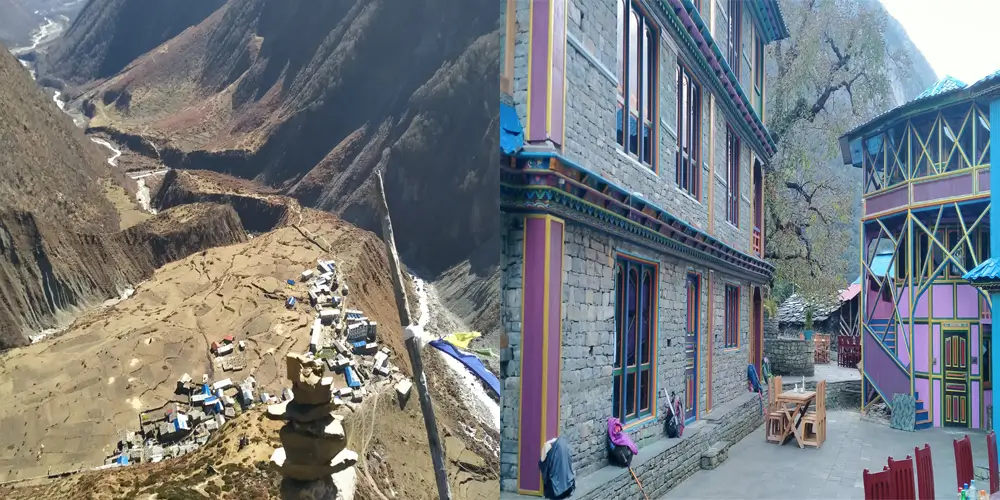
Budget Hotel and Deluxe hotel in Manaslu Trails
In this post, I will share my experience with Manaslu Trek food and accommodation, the types of food available, what guesthouses are really like, and what you should realistically expect.
Accommodation on the Manaslu Circuit Trek
The Manaslu Circuit Trek encircles the world’s 8th highest mountain, Mt. Manaslu (8,163 m). My journey began in Machhekhola after spending a night at a local community lodge. The people in Machhekhola are kind and friendly. I stayed in a small family-run guesthouse decorated with Buddhist prayer flags, mural paintings on the walls, and some Hindu deity details.
The room was furnished with wooden plank flooring, and the walls were separated by bamboo screens. You can easily hear noise from one room to another, so I recommend carrying earplugs.
Local houses in the lower part of the Manaslu Trek are built from stone and mud. The rooms are generally clean and equipped with twin beds, thin mattresses, pillows, bedsheets, a small blanket, and a table. Toilets and bathrooms are shared among several rooms. In most lodges, you will find squat toilets rather than western toilets.
You should bring your own towel, shampoo, conditioner, and slippers. The kitchen is usually attached to the main building, making the lodge smoky at times. Most guesthouses use firewood for heating and cooking. They usually provide a warm dining room, but the sleeping rooms are not heated. After Lho village, nighttime temperatures drop below freezing, so a four-season sleeping bag and a down jacket are highly recommended.
Electricity and Charging
Electricity and device charging are commonly available up to Sama Gaon on the Manaslu Circuit Trek. Locals mainly use electricity for lighting. There are usually no power cuts, but during the spring season, water levels may drop, causing limited power supply.
Sama Gaon, Samdo, and Dharmashala are the coldest places on the trek, and electricity may be disrupted due to cold weather and snowfall. Carrying baby wipes is recommended for personal hygiene.
Charging Ports and Wi-Fi
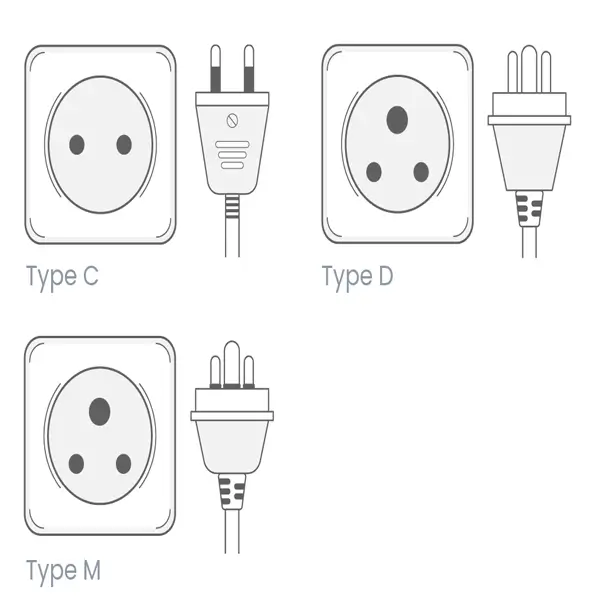
Nepal uses Type C (Europlug, two round pins), Type D (three large round pins in a triangle), and Type M plugs. Every guesthouse charges a small fee, usually around NPR 150 per device, for charging.
Standard Charging plung in Nepal
Wi-Fi is available in most guesthouses for an additional cost of around NPR 200, but the connection is often slow and unreliable. It is best to download e-books, maps, and important documents in Kathmandu before starting the trek.
Most guesthouses use solar panels for hot showers, but they may not work properly in cold conditions. Hot showers typically cost NPR 200–300 per person. In the lower Manaslu region, hot showers are sometimes free of charge.
Food on the Manaslu Circuit Trek
Even though the Manaslu Circuit Trek is a high-altitude trek in Nepal, there is no serious shortage of food. Locals produce wheat, buckwheat, potatoes, barley, and corn, but these supplies are not sufficient to feed families year-round. Most food items must be purchased in cities and transported to the region, making food more expensive along the trail.
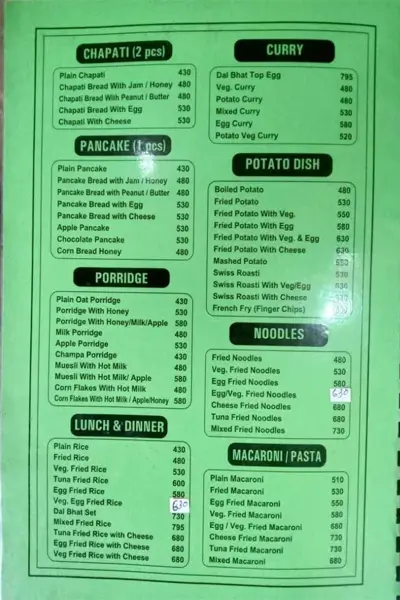
CaptionManaslu Trek Food Menue
Dal Bhat is the most common meal on the Manaslu Trek. It consists of rice, lentil soup, seasonal vegetable curry, and achar, with unlimited refills. Dal Bhat is not just food; it is energy, comfort, and fuel for long trekking days. The saying “Dal Bhat Power 24 Hours” truly applies here.
Local Meals on the Manaslu Trek
Most villagers eat Dhido for lunch and dinner. Dhido is made from wheat, millet, corn, or barley, depending on local availability. Many guides prefer Dhido because it is highly nutritious and rich in vitamins, protein, minerals, and fiber.
If you order local meals like Dal Bhat or Dhido, you can usually refill as much as you want at no extra cost. Eating local food supports the local community, saves energy, and helps uplift daily life. Dal Bhat is especially suitable for high altitude because it is not fried or oily.
Other Optional Meals and Breakfast
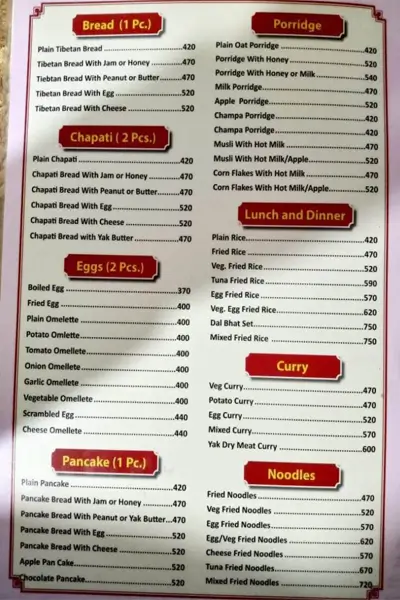
Breakfast on the Manaslu Trek is simple but filling and nutritious. Common breakfast options include oats, muesli, pancakes, eggs, chapati with jam or honey, and potatoes.
Lunch and dinner options include Dal Bhat, potatoes, noodles, momo, pasta, and sometimes pizza or burgers. Vegetarian food is safer and easier to digest at high altitude. I personally avoid meat during the trek, as it is often not fresh and not stored in refrigerators.
Cost of Food and Accommodation on the Manaslu Circuit Trek
Food costs are relatively high due to remoteness and transportation difficulties. All food must be purchased in cities and carried to the region by porters or mules. Some large lodges even charter helicopters to supply food.
Veriety of Food in Manaslu Trek
The nearest towns for purchasing food grains are Gorkha and Arughat. From there, porters and mules take about five days to deliver supplies. Due to high transportation costs and porter wages, food prices increase with altitude.
Expect to pay around NPR 1,000–1,500 for a good portion of a meal. Accommodation typically costs between NPR 1,000–2,000 per night for a basic room. Staying at deluxe hotel cost about 4000/ Nrs per nigh.
Manaslu vs Annapurna Circuit Food and Lodging
The Annapurna Circuit Trek is more popular and offers a wider range of lodges. Food options range from traditional Nepali Dal Bhat to continental dishes. The trails are more crowded and populated, and most lodges provide western toilets, hot showers, and reliable internet and telephone services.
The Manaslu Circuit Trek, on the other hand, is an off-the-beaten-path destination with restricted entry and fewer trekkers. Because the trails are relatively new, food and accommodation options are limited. However, Manaslu is more wild, authentic, and culturally rich. In some places Four Seasons Hotel are built and it cost 4000/ Nrs per night including hot and cold showers, room heating system and so on.
The Manaslu Circuit Trek is less crowded, allowing deeper cultural interaction and stronger human connections. You will experience centuries-old monasteries, traditional Tibetan Buddhism, the distinct Bon religion, high-altitude meadows, and cross-cultural villages. Overall, Manaslu remains a pristine and diverse trekking destination.
Recommended Items for the Manaslu Circuit Trek
Carry personal snacks from Kathmandu: Meals may be served early or late; snacks help avoid long waits.
Four-season sleeping bag: Temperatures frequently drop below freezing. Dharmashala accommodation is very basic where you will be sleeping on the floor with very thin matres. Renting a stinking thin blanket can cost NPR 500.
Metal one water bottle: The water bottle is compulsion throughout the trek. Take an advantage of having metal one bottle for good night sleep. You can fil the bottle with hot water and sleep with it.
Trekking boots: Proper boots with ankle support are essential for uneven terrain.
Flexible itinerary: Weather conditions are unpredictable, and snowfall can block trails.
Extra cash: There are no banks or ATMs in the trekking region.
Necessary trekking gear: Prepare all essential gear as mentioned above.
Food and accommodation on the Manaslu Circuit Trek are simple but sufficient, offering warmth, nourishment, and meaningful human connection. With realistic expectations and proper preparation, the Manaslu Trek provides an authentic and unforgettable Himalayan experience.
The Tsum Valley Wilderness Trek is one of Nepal's most rewarding off-the-beaten-path journey. Geographically, situated between Mt. Manaslu and Ganesh[...]