Practical trekking tips for beginners in Nepal, with lessons from the Khopra Danda Trek on pace, packing, rest, guidance, and choosing the right trail.
The Afternoon I Learned to Slow Down
I remember one afternoon near Khopra Danda when the trail was no longer difficult only because of the climb. It was around 3:30, and my group was already a couple hundred meters ahead of me. They had stopped and were looking back, waiting. I did not want to slow them down, so I tried to walk faster. But the more I hurried, the more my body refused me.
After a while, I raised my hand and signaled them to keep moving.
Then I walked alone.
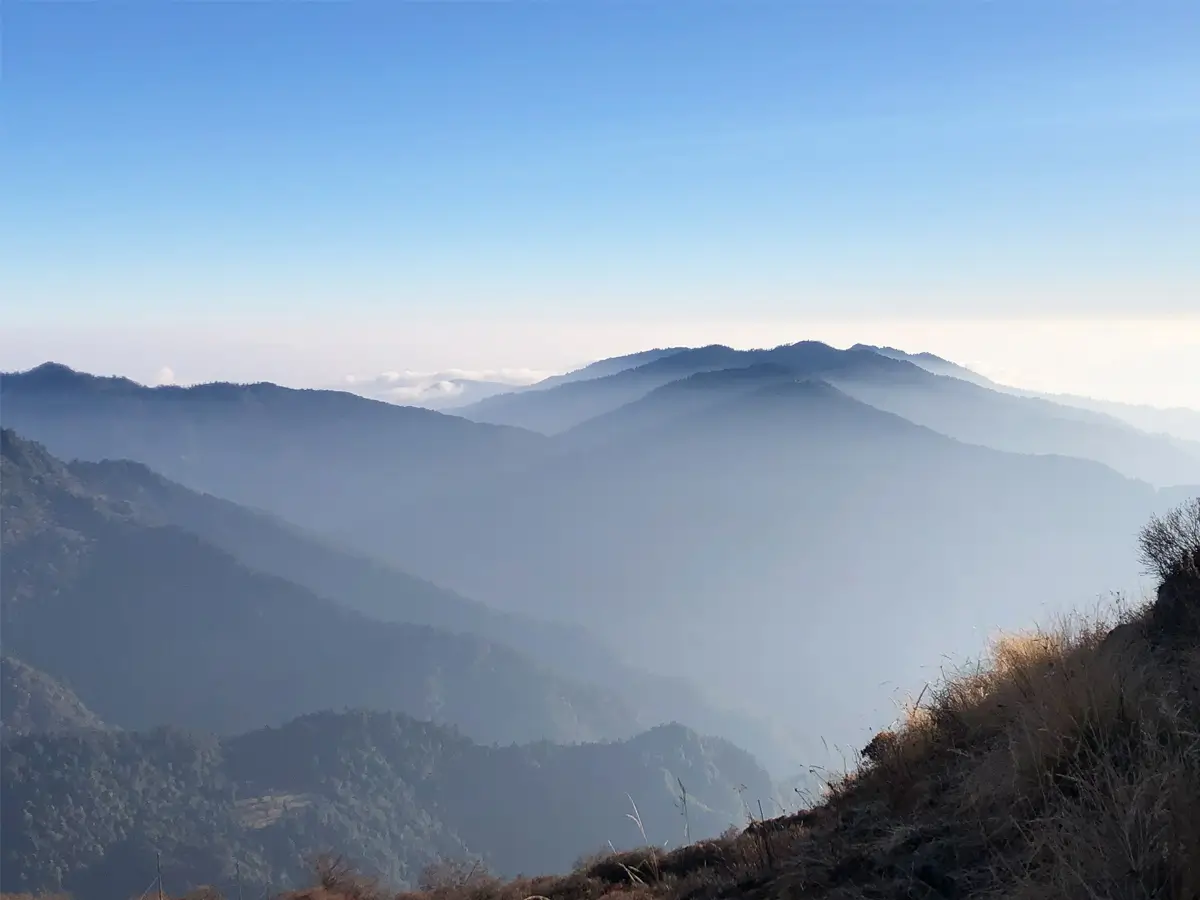
The destination was probably only fifteen minutes away. The trail ahead was not even very steep. It curved along the open hillside, with dry grass on one side and layers of hills falling away on the other, one behind another, fading into blue and mist. The view was beautiful, but it did not feel warm. The wind was chilly against my chest. My legs had become stubborn, and so had my mind. I did not want to take another step.
I cried quietly on the trail.
Khopra Danda trail with layered hills in the Annapurna region
Not because the Khopra Trek was impossible. Not because the mountains were cruel. I cried because I was standing in front of one of the most beautiful views of the Annapurna region and still could not enjoy it. I had reached the mountains, but I had not yet learned how to move with them. That afternoon taught me the first lesson of easier trekking: the trail does not ask you to be strong all the time. It asks you to be steady.
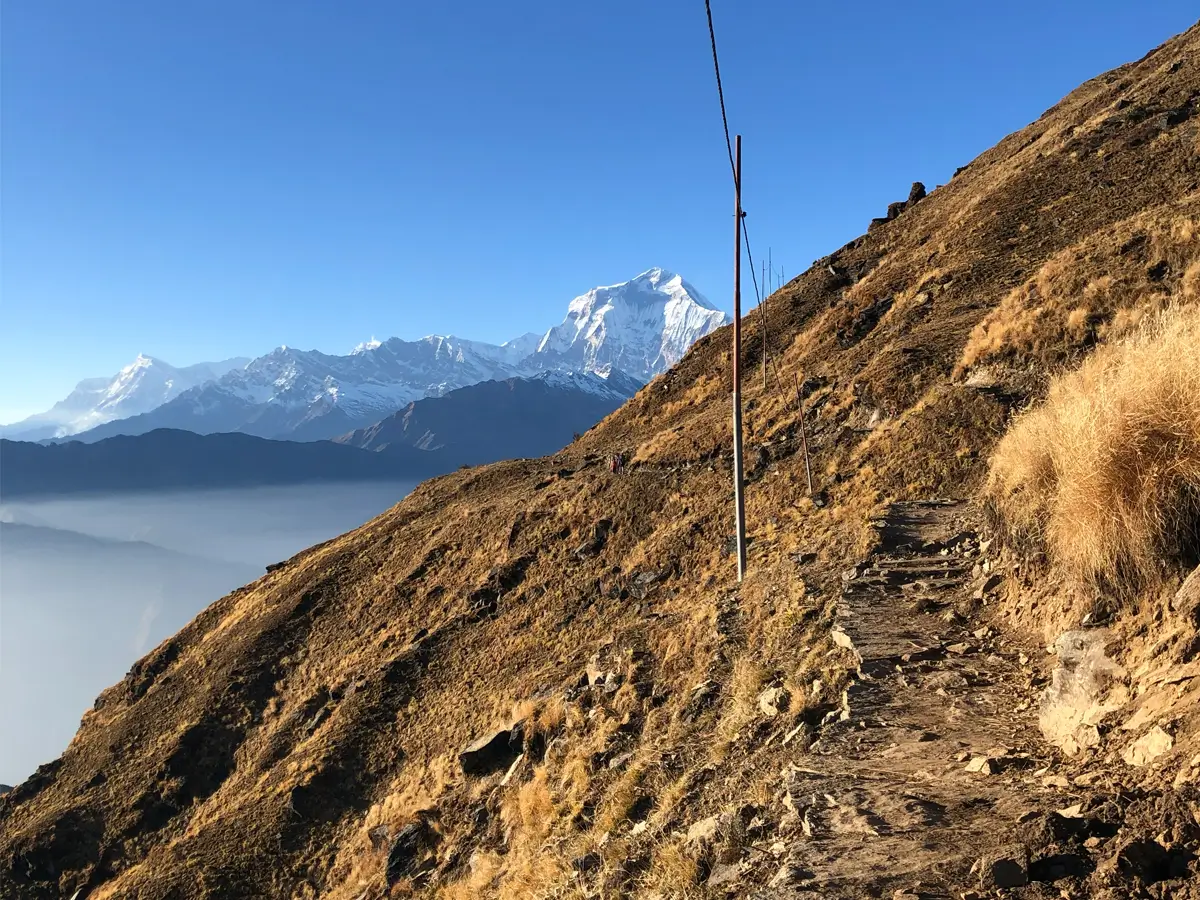
Clear November view from Khopra Danda Trek with hillside trail
What That Moment Taught Me
Only later did I understand that the problem was not only the trail. The Khopra Trek was challenging, yes, but I had also made it harder by the way I walked, the way I packed, and the way I thought about reaching the destination.
I was trying to finish the trail instead of learning how to move through it.
For beginner trekkers, this is often where difficulty begins. Not always in the mountain itself, but in our pace, preparation, clothes, food, water, rest, and expectations. Trekking becomes harder when we rush behind others, carry more than we need, ignore thirst, wear uncomfortable layers, or think only about reaching the next stop.
That afternoon near Khopra Danda became my lesson. Trekking becomes easier when we prepare well, walk slowly, listen to the body, trust the guide, and give ourselves permission to enjoy the trail before reaching the destination.
Beginner-Friendly Does Not Mean Effortless
Many people search for an easy trek in Nepal because they are nervous. They may be first-time trekkers, families, students, older travelers, or people who want to see the Himalayas without choosing a very demanding route. That is completely understandable.
But the word “easy” can be misleading.
No Himalayan trek is easy in the way a city walk is easy. There may be uphill sections, cold mornings, tired knees, changing weather, basic teahouses, and moments when your body asks why you came. A beginner-friendly trek in Nepal is not a trek where you feel nothing. It is a trek where the difficulty can be managed with the right planning, proper guidance, realistic walking hours, and a pace that respects your body.
So before choosing any trek for 2026 or 2027, ask a better question than, “Is this trek easy?”
Ask: Is this trek right for my body, my time, my comfort level, and my walking pace?
Smart Trekking Tips for Beginners
1. First, Check the Height and the Trail
For beginners, walking five to six hours is usually manageable if you go slowly. But in Nepal, the real question is not only how far you walk. It is also how high you go, how steep the trail is, and whether your body gets enough time to adjust.
So before booking any trek, do not only ask, “Is this trek easy?”
Ask better questions:
How high does the trek go?
How many hours do we walk each day?
Are there steep sections?
Is there enough time to rest?
What happens if someone walks slowly?
Will the guide know the local trail, villages, and weather conditions?
A beginner-friendly trek should match your body, time, fitness, comfort level, and confidence. The right trekking company will not just push the most popular package. It will help you choose the trail your body can honestly handle.
2. Pack According to Weather, Not Just Season
I travelled to Khopra in November. It was autumn, and the weather was clear. But clear weather does not mean your body will always feel comfortable. While walking, you may feel hot. When you stop, or when the wind hits your chest, you may suddenly feel cold.
So pack according to the weather first, and then think about the season.
Before your trek, check the weather forecast for your trekking days. Also ask your trekking company about altitude, wind, temperature, rain or snow chances, and lodge conditions. A locally operated company like Global Eco Trails can guide you better because they know the trail, not just the map.
My mistake was that I packed without thinking smartly. My bag felt heavy. My socks were too thick for walking, and my feet started to hurt. My jacket was useful when it was cold, but while walking it became too warm. If I removed it, the wind felt cold. If I wore it, I sweated.
The trick is simple: wear lighter clothes while walking and keep warmer clothes for evening and night.
Do not pack too many clothes only for photos. After the trek, you will remember how you felt more than what outfit you wore. You cannot beat nature, dear trekker. You can only prepare for it.
A light bag is not only a travel choice; it is a mental choice.
3. Pack Less by Washing Small Items
One small trick can save space: carry a small bottle of detergent.
You do not need to carry too many socks, underwear, or small clothes. You can wash small items in the evening and dry them during the day by clipping them to your backpack while walking. Keep them inside a small pouch or laundry bag if you do not want them visible.
This is not glamorous advice, but it is useful advice.
For socks, do not carry only very thick ones. Thick socks may feel warm while resting, but while walking they can press your toes and make your feet painful. Carry socks that fit well inside your shoes. In many beginner treks, two or three pairs are enough if you wash and dry them properly.
4. Walk at Your Own Pace
On the Khopra Trek, I made one big mistake: I tried to walk at my group’s pace.
They were ahead, waiting for me, and I did not want to slow them down. So I hurried. But the more I hurried, the more tired I became. My body was clearly saying, “Slow down,” but I was busy thinking, “Don’t make them wait.”
You do not have to do that.
If others walk fast, let them walk fast. Your job is to listen to your own body. Slow down when you need to. Stop when you need to. Drink water before you feel weak. Trekking is not about reaching five minutes earlier.
In the mountains, slow is not weakness. It is wisdom.
A good guide also helps here. They know where to rest, where to stop for tea, and how to manage different walking speeds. So tell your guide if you are tired. You are not disturbing the trek. You are taking care of it.
The destination is reached by rhythm, not hurry.
5. Eat, Drink, and Rest Before Your Body Complains
Do not trek on an empty body.
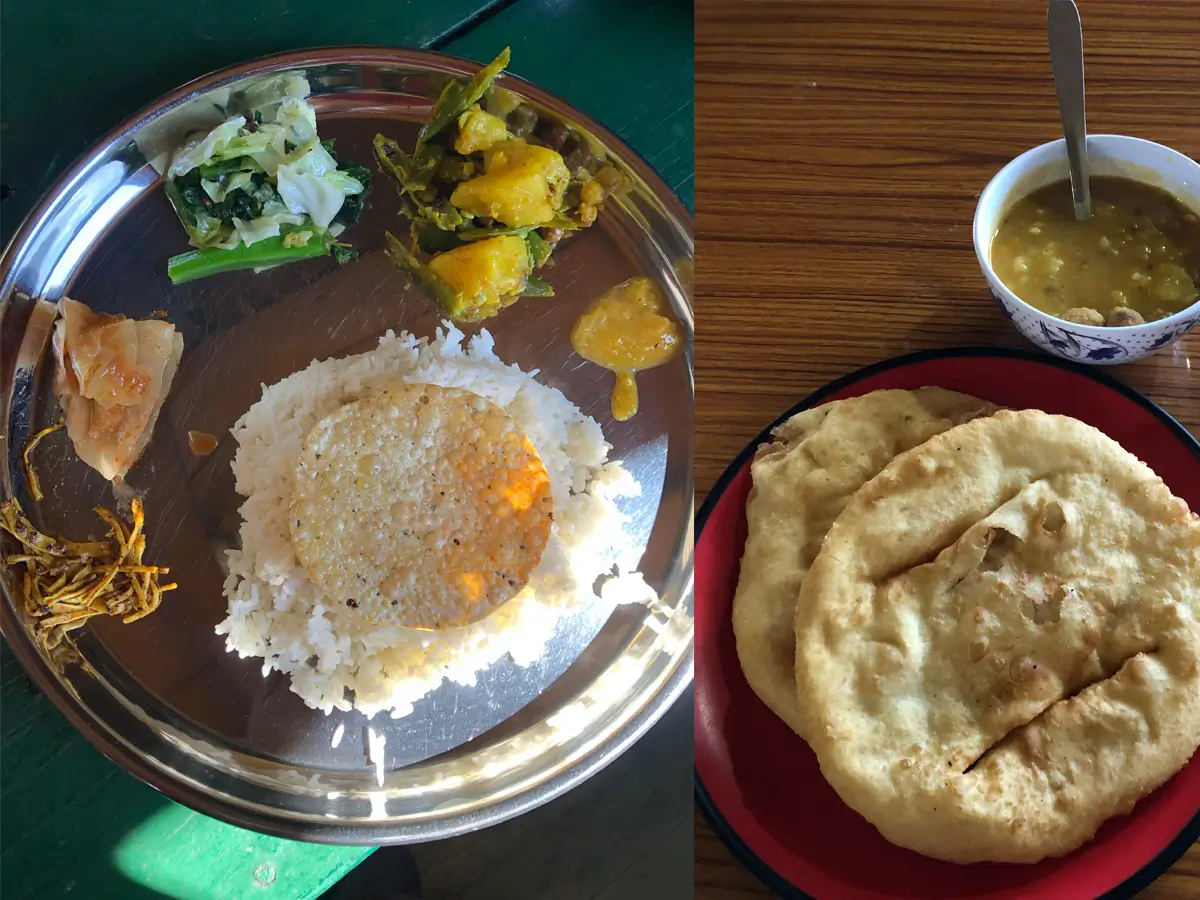
Drink water regularly. Carry ORS or electrolytes if you sweat a lot or feel low on energy. Eat proper meals on the trail. Dal bhat, soup, noodles, potatoes, eggs, tea, and simple teahouse food can give you energy to continue.
Hot meals at cold temperature, Dal Bhat
Also keep small snacks in your bag: chocolate, energy bars, nuts, or biscuits. There is a special kind of happiness in eating a small chocolate in the middle of a forest when your legs are tired.
And rest. Really, rest.
Stopping for five minutes does not mean you are weak. It means you are making sure the next hour does not punish you.
6. Use a Walking Stick or Trekking Pole
A walking stick may look simple, but on the trail it can feel like a friend.
It gives support while climbing and helps with balance on uneven paths. It can also reduce pressure on your legs, especially when you are tired. There is a reason people call it a companion of old age, but on a trek, it can become a companion for anyone.
When the trail feels long, even small support matters.
7. Be Careful With Showers in Cold Places
After walking, you may want to shower immediately. But in cold places, frequent cold showers can make you uncomfortable or sick.
If hot water is available and you have time to dry your body properly, that is different. But avoid bathing in cold water at higher stops, especially when the wind is strong or the temperature is low. If needed, use a towel or handkerchief to wipe sweat and change into dry clothes.
Your goal is not to look fresh every hour. Your goal is to stay warm, dry, and healthy enough to enjoy the next day.
8. Protect Your Skin
Sun, wind, dry air, and cold can affect your skin on the trail. Use sunscreen during the day, especially in open areas. Keep moisturizer or lip balm with you. These may seem like small things in the city, but on the trail they can save you from cracked lips, dry skin, and sunburn.
Smart trekking is not one big decision. It is many small decisions made at the right time.
9. Do Not Treat the Guide Like a Walking Map
A guide is not only there to show the trail.
A good guide knows where the path becomes difficult, where to stop for tea, how fast the group should move, and what to do when someone is tired. They also know the local villages, lodge owners, weather behavior, and the small things that Google Maps will never tell you.
For beginners, this matters a lot.
When you travel with a locally operated Nepal trekking company like Global Eco Trails, you are not only buying an itinerary. You are getting local knowledge, safety awareness, accommodation support, and someone who understands the real condition of the trail.
So ask questions. Tell your guide if you are tired, cold, thirsty, or uncomfortable. A good guide cannot help properly if you pretend everything is fine.
Trekking becomes easier when you do not try to manage everything alone.
Beginner-Friendly Treks in Nepal for 2026/2027
Khopra Trek taught me one lesson clearly: choosing the right trek matters. A beginner-friendly trek in Nepal should not only be short or popular. It should have a manageable route, proper rest points, good guidance, realistic walking hours, and enough beauty to keep you motivated when your body feels tired.
Here are some beginner-friendly and beginner-manageable treks from Global Eco Trails that are worth considering for 2026 and 2027.
The Chisapani Nagarkot Trek is a short trek near Kathmandu, suitable for beginners, families, and trekkers with limited time. It is a good first test if you want to understand how your body feels on forest trails, village paths, and gentle Himalayan routes before choosing a longer trek.
The Ghorepani Ghandruk Trek is a classic Annapurna region trek with village stays, forest trails, stone steps, and the Poon Hill route. It is a good choice for beginners who want a fuller Himalayan trekking experience without committing to a very long itinerary.
The Pikey Peak Trek is a quieter lower Everest region trek for beginners who want mountain views, Sherpa culture, and less crowded trails. It is suitable for people who want something peaceful, but still want to feel that they are really walking in the hills.
The Langtang Valley Trek is a short and accessible trek north of Kathmandu with villages, mountain scenery, and cultural experience. It can be a good option for beginners who want a meaningful Himalayan route with proper pacing and guidance.
The Annapurna Sanctuary Trek is better for beginners who want a bigger mountain feeling and are ready for a multi-day trek. It needs more respect than a short beginner route, but with proper preparation and guidance, it can be a rewarding step forward.
The Mardi Himal Trek begins and ends around Pokhara and offers forest trails, ridges, and close mountain views. It is better for prepared beginners who are ready for uphill walking, changing weather, and slightly more effort.
The Annapurna Base Camp Trek is a rewarding choice for beginners with good fitness and proper guidance. It should not be chosen casually, but with a well-paced itinerary, enough rest, and realistic expectations, it can be a strong first big trek.
Khopra Danda / Khopra Ridge Trek
The Khopra Danda Trek, also known as the Khopra Ridge Trek, is a quieter Annapurna region trek with both easier and more challenging sections. It is not effortless, but with slow walking, light packing, proper rest, and good guidance, it can be a beautiful choice for beginners who want a less crowded trail.
Do not choose a trek only because someone says it is easy. Choose the trek that matches your body, time, comfort level, walking pace, and expectations. A good Nepal trekking company helps you make that choice honestly.
Walk Smart, Not Hard
Khopra Trek taught me that trekking does not become easier only because the trail is easy. It becomes easier when you choose the right route, pack lightly, walk at your own pace, eat properly, drink enough water, rest without guilt, and listen to your guide.
For beginners, the goal should not be to prove anything to the mountain. The goal is to reach safely, enjoy the trail, and still have enough energy to feel the place when you arrive.
Whether you choose Khopra Danda, Ghorepani Ghandruk, Chisapani Nagarkot, Mardi Himal, Pikey Peak, Langtang Valley, or another beginner-friendly trek in Nepal, remember this: the mountain does not ask you to be fast. It asks you to be steady.
If you are planning your first trek in Nepal for 2026 or 2027, Global Eco Trails can help you choose a route that matches your time, fitness, comfort level, and expectations.
Trekking becomes easier when you stop fighting the mountain and start walking with it.
FAQs: Beginner-Friendly Treks in Nepal
What is a beginner-friendly trek in Nepal?
A beginner-friendly trek is not always the easiest-looking trail. It is a trek with manageable walking hours, suitable height, proper rest, good guidance, and a pace your body can handle.
How many hours should beginners walk in Nepal?
For many beginners, five to six hours a day is manageable if the pace is slow and steady. The real challenge is often height, steep sections, weather, poor packing, and walking too fast.
Is Khopra Trek good for beginners?
Khopra Trek can be suitable for prepared beginners with good pacing and guidance. It is not effortless, but it is rewarding for trekkers who want a quieter Annapurna region trail.
What should beginners pack for trekking in Nepal?
Pack according to the actual weather first, then the season. Carry light walking clothes, warm evening layers, suitable socks, water, snacks, sunscreen, basic medicine, and rain or wind protection.
Why is a guide helpful for beginner trekkers?
A guide helps with more than navigation. A good guide understands pace, weather, local villages, resting points, lodge coordination, and safety on the trail.
The Tsum Valley Wilderness Trek is one of Nepal's most rewarding off-the-beaten-path journey. Geographically, situated between Mt. Manaslu and Ganesh[...]